Social Media Marketing for Ottawa Businesses: Expert Advice from LocaliQ's Stacey Hull
With the evolution of digital marketing small businesses have a number of ways to reach customers online. Typical channels include websites, SEO (search engine optimization - aka showing up on Google), Digital advertising (Google Ads, display ads), email marketing, and social media (paid and organic). With consumers searching, researching, and making purchasing decisions across multiple digital channels, businesses need strategies that not only increase visibility but also generate measurable results.
As a highly accessible platform, local Ottawa businesses can use social media as a part of their digital marketing strategy. Organic social media focuses on building relationships and engaging with audiences through regular, unpaid content, helping businesses establish trust, brand awareness, and a loyal online community. Paid social media uses targeted advertising to reach specific audiences, expand visibility beyond existing followers, and drive actions such as website visits, lead generation, and sales. But together, these strategies create a balanced approach to both long-term brand growth and immediate business results.
An Ottawa Digital Marketing Consultant with over 10 years experience at LocaliQ, Stacey Hull shares practical insights on:
how she supports Ottawa and other Canadian businesses in navigating the evolving digital marketing landscape
how organic and paid social media can fit into a broader digital marketing strategy
Tips and tricks for local businesses using social media and digital marketing
Stacey, what is your role at Local IQ? How do you work with local Ottawa businesses?
SH: I’m a Digital Marketing Consultant with LocaliQ here in Ottawa (Carleton Place), and my role is really focused on helping local businesses grow through smart, data-driven digital marketing strategies. I work directly with business owners to understand their goals - whether that’s increasing leads, improving online visibility, or driving more in-store traffic, and then build customized marketing solutions to support those objectives.
A big part of what I do is acting as a partner to local Ottawa businesses. For many businesses, working with a marketing agency offers access to a full team of specialists rather than relying on one internal hire to cover everything. Instead of one person trying to manage strategy, content, paid ads, analytics, and social media all at once, an agency brings together experts in each area, along with the tools and data needed to make informed decisions quickly. This can be especially valuable for small to mid-sized businesses that may not have the resources or time to build a full in-house marketing department.
This also means I’m not just setting up campaigns; I’m helping my clients understand what’s working, why it’s working, and how to continuously improve their digital presence. I support businesses across a wide range of industries from roofing to veterinarians by combining tools like paid search, social media advertising, and organic digital strategies to help them reach the right audience at the right time.
How does organic social media fit in the digital marketing strategy?
SH: Organic social media plays an important foundational role in a digital marketing strategy because it focuses on building long-term relationships with an audience rather than driving immediate paid results. It’s where businesses can consistently show up, share their brand personality, and engage directly with their community through content that informs, educates, or adds value.
From a strategic standpoint, organic social helps establish trust and credibility over time. When potential customers research a business, they often look at social media presence to see how active, responsive, and authentic the brand is. It also supports other marketing efforts by reinforcing messaging from paid campaigns, website content, and broader brand initiatives.
While organic reach alone can be limited due to platform algorithms, it still plays a key role in keeping audiences engaged, nurturing existing followers, and strengthening brand awareness. In many ways, it acts as the “always-on” layer of a digital strategy that supports and enhances everything else.
For example, a roofer in Nepean might use organic social media to post before-and-after photos of completed projects, share maintenance tips for homeowners, or highlight seasonal reminders like preparing roofs for winter. This type of content doesn’t directly push a sale, but it keeps the business top of mind so that when someone in the community does need roof repairs, they already recognize and trust that company. The roofers I work with obviously do a lot of seasonal work in Ottawa and Ontario but it’s important that they’re not disappearing online in the winter for when people are planning that summer expense.
Similarly, back to our other example - a veterinary clinic in Kanata might use organic social to share photos of their real (cute!) clients to share pet care advice, introduce staff members, or post educational content about common pet health issues. This helps build a sense of familiarity and reassurance for pet owners, so when an urgent situation arises or a new pet needs care, the clinic already feels like a trusted resource. They also might be inclined to follow you because they know the furry clients featured on the account!
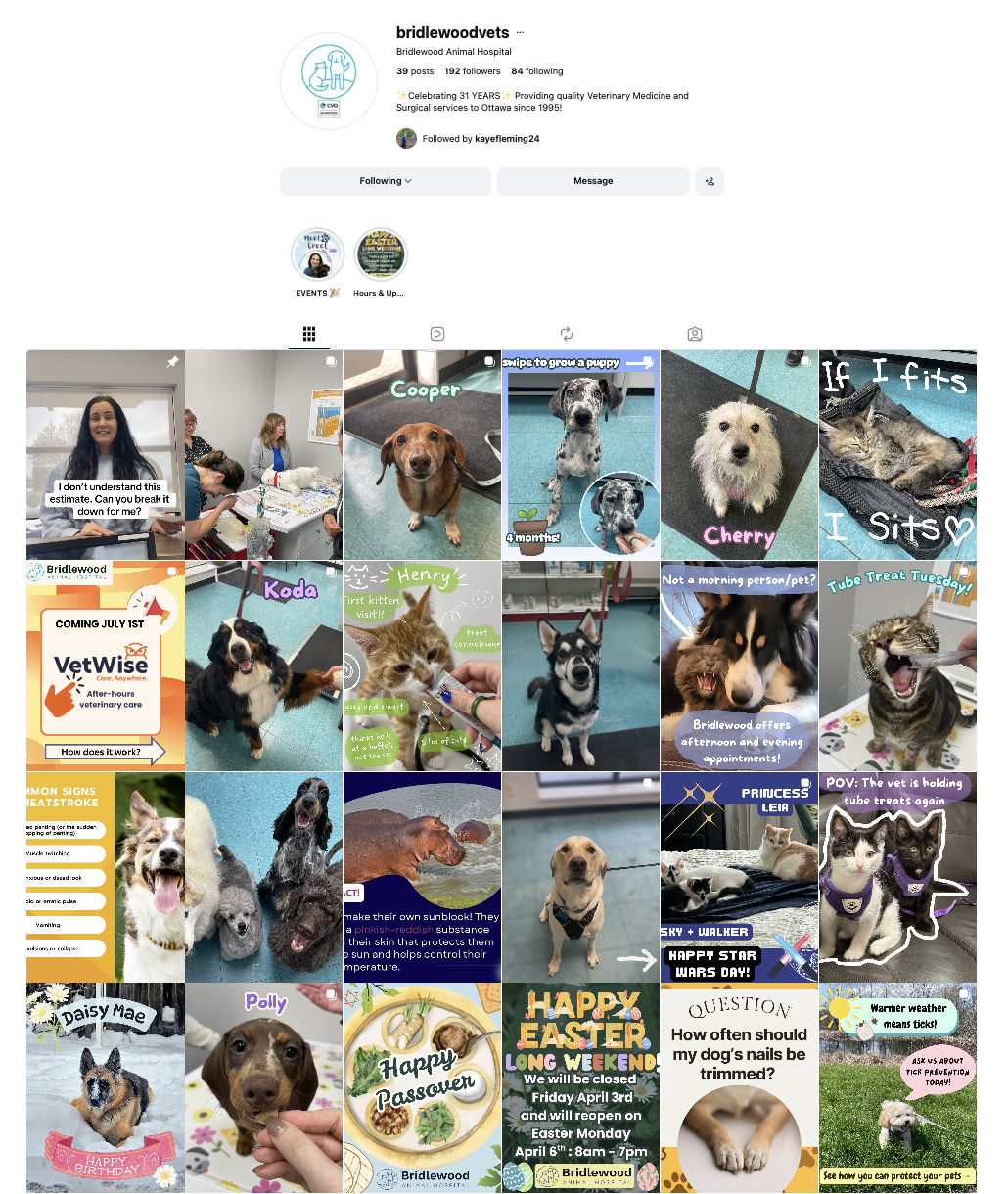
A good example of a Kanata vet using their real clients on their organic social media.
How does paid social media fit in the digital marketing strategy?
SH: Paid social media fits into a digital marketing strategy by helping businesses extend their reach beyond their existing audience and target specific groups of potential customers with precision. Unlike organic social, which focuses on long-term engagement and relationship building, paid social is designed to drive faster, more measurable results such as website traffic, lead generation, and conversions.
Paid social also plays a key role in amplifying strong organic content and supporting broader campaigns by keeping the business visible across multiple touchpoints. When used effectively, it allows businesses to scale their reach, control their budget, and track performance in real time, making it a critical component of a well-rounded digital marketing strategy.
For example, a roofer can use paid social ads to target homeowners in a specific geographic area (i.e. Orleans or Kanata) who are more likely to need roof repairs or replacements, especially after a major storm. This ensures their message is reaching the right people at the right time, rather than relying only on organic reach. Similarly, a veterinary clinic can run paid campaigns promoting new client offers or seasonal services like vaccinations or tick-prevention, targeting pet owners within a defined radius to bring in new appointments.
Typically Facebook and Instagram (Meta Ads Manager) are the core platforms because they offer the strong geo-targeting, detailed audience segmentation, and a wide reach across different age groups.
TikTok is increasingly valuable for businesses looking to reach younger audiences or build awareness through short-form, engaging video content.
LinkedIn is more effective for B2B-focused industries, where businesses are targeting professionals or decision-makers.
Which industries in Ottawa would benefit most from social media marketing, and how often should they be posting? What kind of return on investment could businesses typically expect?
SH: Social media can be valuable for almost any industry, but it tends to be especially effective for businesses where trust, visibility, and local presence play a big role in the decision-making process.
In Ottawa, industries like home services (roofing, HVAC, landscaping), healthcare providers (such as veterinary clinics, dental offices, and physiotherapy), real estate, retail, restaurants, and professional services all benefit significantly from having an active social media presence.
In terms of frequency, consistency matters more than volume. Most small businesses see strong results posting around 1-3x times per week, focusing on a mix of educational content, community engagement, and promotional messaging. The key is staying active enough to remain visible without sacrificing quality or authenticity. Again, this should be part of an integrated marketing strategy so it depends on whether your focus should be on organic (and paid) social or if it’s an auxiliary platform.
When it comes to return on your investment - social media often works as both a brand-building and lead-generation tool. Organic social typically delivers long-term value through increased awareness and trust, while paid social can produce more immediate, measurable returns like website traffic, appointment bookings, and quote requests. The strongest ROI usually comes when businesses combine both - using organic content to build credibility and paid campaigns to amplify reach and drive conversions.
For different industries, ROI from social media can show up in very different timelines. For example, a roofing company or veterinary clinic often sees ROI build over time through trust, repeat business, and higher-value services, but a restaurant or retail store can experience much more immediate, short-term returns.
For a roofing company, ROI is typically measured through lead generation and high-value jobs. For example, a well-targeted paid social campaign might generate quote requests from homeowners. Even if only a small percentage of those leads convert, the value of a single roof replacement can make the return on ad spend very strong. Organic social also contributes by showcasing completed projects and building credibility, so when homeowners are ready to buy, the company already feels familiar and trustworthy. But because a roofing job is a bigger purchase - the customer journey might be longer and the time from awareness/ consideration might be longer before the prospect actually makes the decision and becomes a customer.
A restaurant using paid social media can promote daily specials, limited-time offers, or events like live music nights and see same-day or next-day results in the form of increased reservations and foot traffic. For instance, a targeted Instagram or Facebook ad promoting a weekend brunch special can directly drive bookings within hours of the campaign going live.
Organic social also plays a role by keeping the restaurant top of mind through mouth-watering food photos, customer experiences, and updates to the menu. While organic builds ongoing awareness and loyalty, paid social often delivers the immediate spike in visibility and demand that translates quickly into covers and sales.
Together, this makes social media one of the most measurable and responsive marketing channels for restaurants compared to industries with longer customer decision cycles.
When should a business consider outsourcing social media to an agency like LocaliQ?
SH: Someone should consider outsourcing social media to an agency when it starts to require more time, expertise, and consistency than they can realistically manage in-house while still focusing on running their core business.
For many small and mid-sized businesses, social media often begins as something handled internally, sometimes by a business owner or an employee wearing multiple hats. But as the business grows, it becomes harder to keep up with consistent posting, content creation, paid advertising, and performance tracking. At that point, outsourcing can bring structure, strategy, and momentum that’s difficult to maintain alone.
It’s also a strong option when businesses want to see more measurable results from their efforts. Agencies bring specialized expertise across content strategy, paid social, analytics, and audience targeting, along with tools and data insights that help optimize performance over time. For example, instead of guessing what might work, an agency can quickly test, refine, and scale campaigns based on real results.
For example, a roofing company is usually busy managing quotes, job sites, and customer calls - especially during peak seasons after storms. Social media often falls to the bottom of the priority list, even though it’s an important channel for generating leads. In this case, an agency can step in to consistently showcase completed projects, run targeted ads to homeowners in specific areas, and generate a steady flow of quote requests without taking time away from operations.
Similarly, a veterinary clinic is focused on patient care, appointments, and emergencies, leaving little time for content creation or campaign management. An agency can help by creating a steady stream of educational posts, promoting services like vaccinations or wellness exams, and managing paid campaigns that attract new pet owners in the area. This ensures the clinic stays visible and engaged with the community, even when internal teams are focused elsewhere.
What are your top tips, tools, and best practices for Ottawa businesses looking to improve their social media presence?
The most effective social media strategies for my clients and Ottawa businesses focus on consistency, local relevance, and authenticity. Whether you’re a retail shop, service provider, or professional business, showing up regularly with content that reflects YOUR work, YOUR people, and YOUR community helps build recognition and trust over time. Think less about going viral and more about staying visible to the people most likely to buy from you.
My Do’s:
Do focus on local content that connects with the Ottawa community
Do post consistently (even once a week is effective if it’s quality content)
Do use a mix of content types: educational, promotional, and even personal
Do make time to engage with comments, messages, and local community pages
Do try and create a content calendar - it’s easier to execute and stick to a schedule when you plan ahead.
Do use online resources to help with your social media content. For example our company LocaliQ has a great blog with social media ideas and strategies - or Pinterest is a place I love to go to for visual inspiration.

My Dont’s
Don’t post randomly or without a clear strategy
Don’t rely only on promotional content - audiences need value too
Don’t use generic, non-branded visuals (i.e. stock photos or AI generated photos) that don’t reflect your business. It’s inauthentic and can come off as cheap and insincere.
Don’t run paid campaigns without defining your goal or audience first. Meta makes it really easy to “boost” posts - you could be just wasting your money
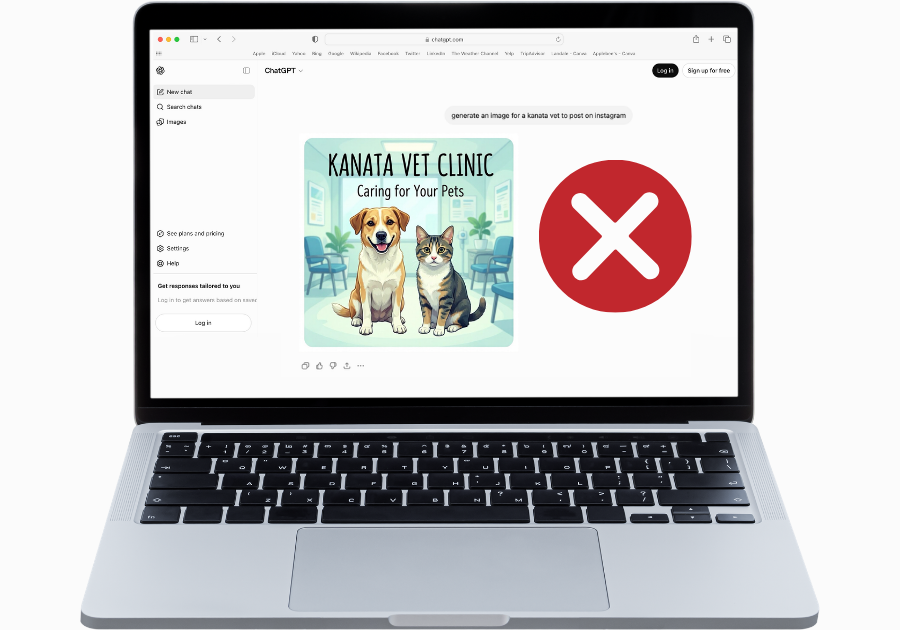
Do not: generate quick inauthentic AI content.
As Stacey highlights throughout this conversation, the key isn’t just being present online—it’s about being intentional, consistent, and customer-focused. Ottawa businesses have more opportunities than ever to connect with their audiences in meaningful and measurable ways. From building awareness through organic social media to driving immediate results with paid campaigns, success today comes from using digital channels in a strategic, integrated way.
As an Ottawa business whether you choose to manage your marketing in-house or partner with an agency, having a clear strategy that aligns organic and paid efforts can make a significant difference in both short-term performance and long-term growth.
Ultimately, social media and digital marketing are no longer optional, they are essential tools for Ottawa businesses looking to stay competitive, build trust, and grow in an increasingly digital-first marketplace.